
The Meaning Behind Every Mahjong Tile Symbol
Sep 24, 2026 · 6 min read
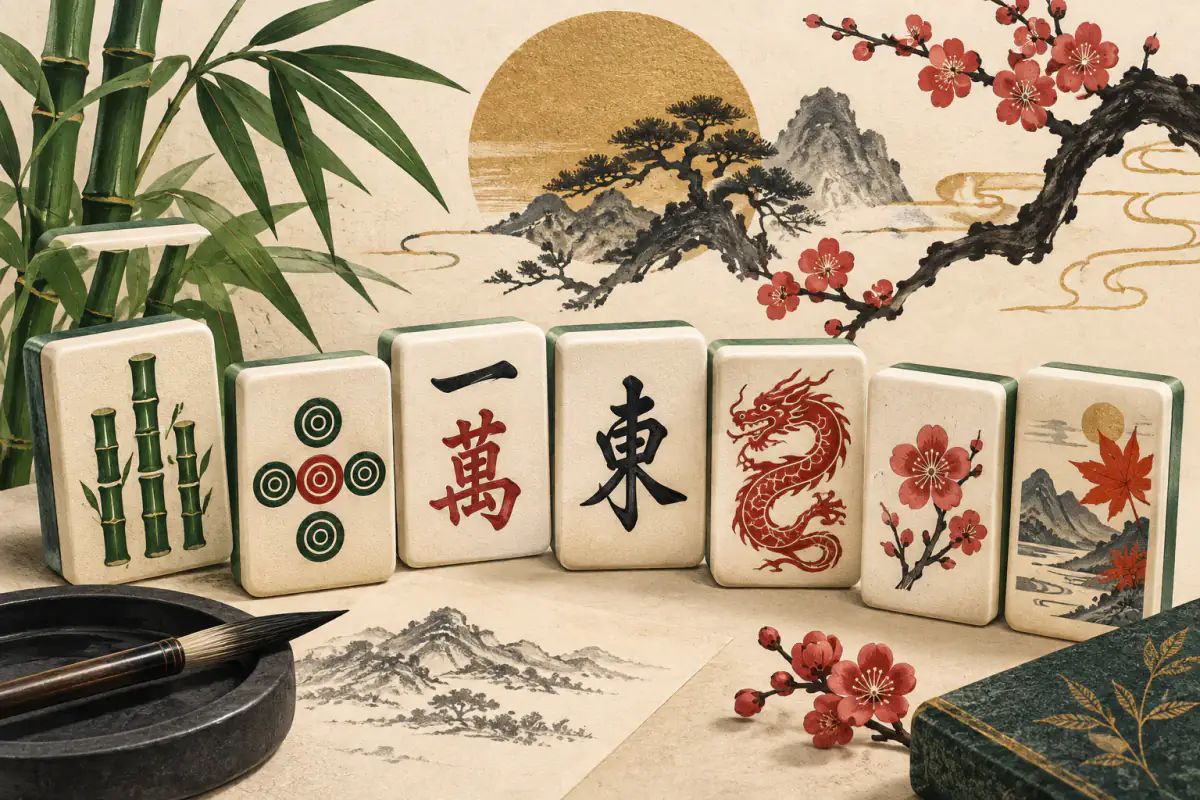
Mahjong tiles aren't just random numbers and pictures -- every suit, honor tile, and even the bonus tiles carry their own meaning rooted in classical Chinese culture.
| Suit/Tile | Symbol | Meaning/Origin |
|---|---|---|
| Bamboo (1) | A bird (sparrow/peacock) | Believed to stem from an early printing quirk that became a permanent standard. |
| Bamboo (2-9) | Bamboo stalks | Represents strings of ancient Chinese coin currency ("strings of cash"). |
| Characters | Number + 萬 (wan) | "Wan" means ten thousand, referencing a currency value -- mahjong's roots in money-themed cards. |
| Circles | Stacked circles | Represents round metal coins themselves, the most basic currency. |
| Red Dragon | The character 中 (center) in red | Happiness and vitality. |
| Green Dragon | The character 發 (fa) in green | Prosperity and financial fortune. |
| White Dragon | A plain/blank box | Purity; in some interpretations, also fairness/justice. |
| Winds | The 4 cardinal directions | The cardinal directions, and simultaneously the 4 players' seating positions. |
| Flowers/Seasons | A flower or season numbered 1-4 | Optional bonus tiles, each tied to one of the 4 seasons/iconic plants in Chinese symbolism. |
Why the 1 Bamboo Tile Looks Different
The 1 Bamboo tile is the only number tile that doesn't directly depict the object its name suggests -- instead of a bamboo stalk, it's drawn as a bird. The most common theory: early tile manufacturers made counterfeiting harder by deliberately giving one "key" tile a design that broke the pattern, and this design eventually stuck as the standard.
The Meaning Behind Flower and Season Tiles
If your set has 8 extra tiles (Flowers and Seasons), each is usually numbered 1-4 corresponding to the order of the seasons (Spring, Summer, Autumn, Winter) or iconic plants (Plum, Orchid, Bamboo, Chrysanthemum) in classical Chinese symbolism -- though in many modern rulesets (including standard Riichi), these tiles aren't used at all.
Learn more tile basics in the beginner's guide to mahjong.
Read the Beginner's Guide →